Anthurium 'Delta Force'
Anthurium
Anthurium Delta Force is a velvet-textured hybrid (clarinervium × pedatoradiatum) with distinctive triangular leaves reaching 12–18 inches. It requires 60–80% humidity, bright indirect light, and regular feeding. Difficulty: intermediate. Price: $40–$200 USD, with tissue culture bringing costs down significantly.
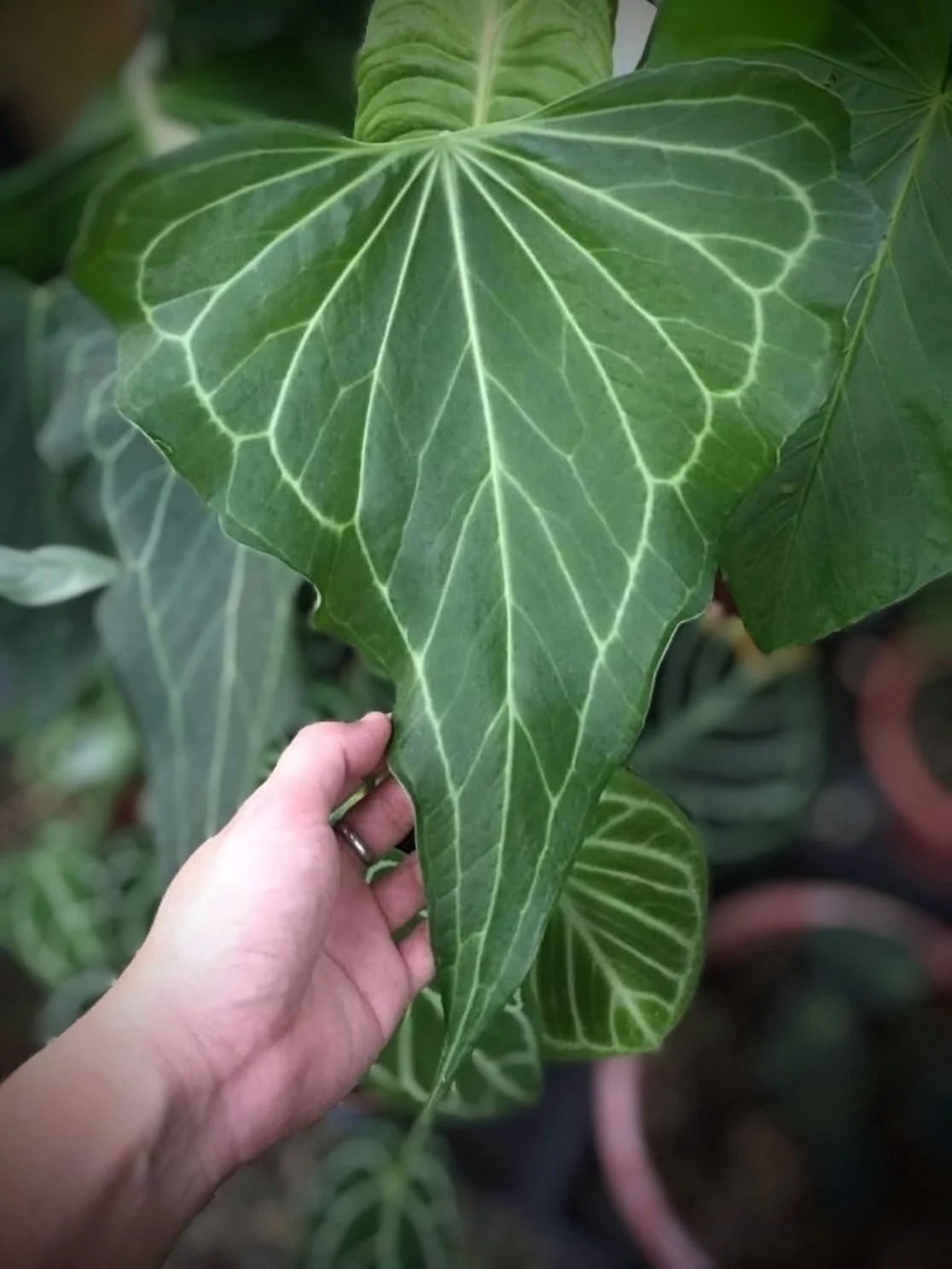
A striking hybrid built for durability. Delta Force fuses the bold triangular architecture of its pedatoradiatum parent with clarinervium's legendary velvety texture — producing a plant that grows fast, tolerates ambience, and commands attention at every stage. Mature leaves reach 12–18 inches, with the characteristic triangular geometry becoming fully defined by the fourth or fifth leaf.
Last reviewed: March 2026
At a Glance
- Price range
- $40-$200 — TC has stabilised pricing
- Leaf form
- Triangular — Tapers to a narrow point
- Leaf size
- 12–18 inches at maturity — Full geometry by 4th–5th leaf
- Difficulty
- Intermediate — Hardy, but humidity matters
- Humidity
- 60–80% — Tip crisp below this
- Light
- Low to bright — Handles both well
- Media
- LECA-friendly — Thick roots love open media
Care Requirements
- Light
- Low to bright indirect — Thicker leaves and a deep olive-green pigmentation mean Delta Force tolerates a wider light range than most velvet anthuriums. It handles bright indirect and even short stints of gentle direct sun without burning. A north or east-facing window is ideal; a south window with a sheer works fine.
- Humidity
- 60–80% — The most critical variable for this plant. Delta Force's leaves taper to a fine narrow point, and that tip is the first thing to crisp when humidity drops. Browning starts at the very tip and creeps inward over time. The plant survives below 60% but the cosmetic damage accumulates quickly. A humidifier is the only reliable solution — misting doesn't cut it.
- Watering
- Moist, not wet — Water thoroughly and allow the top 1–2 inches to dry before re-watering. In LECA or chunky media, this happens faster. Root rot is possible but Delta Force is more forgiving than most anthuriums — the thick root system buffers brief over-watering better than narrow-rooted species. Reduce frequency in winter.
- Fertilising
- Frequent, diluted — Delta Force is a heavy feeder relative to other collector anthuriums. Regular feeding during active growth is essential to maintain leaf size and speed. A balanced liquid fertiliser at quarter to half strength weekly, or half strength bi-weekly, keeps it moving. Nutrient deficiency shows as smaller leaves and slowed growth before any visible yellowing.
- Temperature
- 65–85°F (18–30°C) — Typical household temperatures are fine. Avoid cold drafts and windowsill exposure in winter — sustained temperatures below 60°F slow growth noticeably. Tissue culture plants are particularly sensitive to thermal shock on arrival.
- Repotting
- Every 6–12 months — Delta Force grows thick, relatively unbranched white roots that fill available space quickly. Plan to repot once the roots are clearly circling or emerging from drainage holes. The thick root system makes it well suited to chunky or open media — LECA, perlite-heavy mixes, or semi-hydro setups all work well.
Substrate
Delta Force performs well in both airy aroid mixes and semi-hydro systems. The key is oxygen at the roots with consistent, not stagnant, moisture.
Chunky Aroid Mix
A balanced organic mix keeps enough moisture for Anthurium roots while retaining airflow and reducing compaction.
Reliable baseline for most growers. Repot every 2-3 years or when root-bound.
LECA / Semi-Hydro (Recommended)
Delta Force adapts strongly to inert media when humidity and nutrient strength are managed carefully.
Excellent once established. Keep fertilizer dilute and monitor EC to avoid salt stress.
Use containers with drainage and avoid oversized pots; choose only 1-2 inches wider at repotting time.
Provenance
Anthurium Delta Force is a deliberate hybrid of two species with well-documented collector histories. A. clarinervium is native to the limestone mountains of Chiapas, Mexico, where it grows as a lithophyte or semi-epiphyte in humid forest shade. A. pedatoradiatum is a Mexican and Central American species known for its dramatically lobed, finger-like leaves. The cross was performed by Steve Nock at Ree Gardens in Miami, Florida in the 1990s. From the resulting seedlings, one plant stood out for a uniquely deltoid, narrow-tipped blade and was named Delta Force. As a hemiepiphyte, Delta Force can be grown terrestrially or mounted — though most collectors grow it as a compact rosette in an open aroid mix or semi-hydro setup. Because this exact phenotype has not been reliably recreated from seed, modern distribution depends heavily on tissue culture and clonal propagation, with prices compressing as TC accessibility has grown.
- 1990s
- Steve Nock performs clarinervium × pedatoradiatum crosses at Ree Gardens in Miami and selects the standout seedling later named Delta Force.
- 2000s–2010s
- Plant circulates mainly through divisions from original stock, remaining scarce and premium-priced among collectors.
- 2020s
- Tissue culture proliferation drives prices down to accessible levels. Available widely but authentication from reputable sources still matters.
Frequently Asked Questions
Care & Environment
- Why are my Delta Force leaf tips turning brown?
- This is nearly always a humidity issue. The narrow pointed leaf tip is the first part of the plant to lose moisture to the air. If ambient humidity is below 60%, tip browning will begin and gradually progress inward. Once brown, the tissue won't recover — but raising humidity prevents further spread. A humidifier is the only reliable fix.
- Can Delta Force grow in LECA?
- Yes — and it's arguably one of the best media choices for this plant. Delta Force grows thick, unbranched white roots that transition readily to inorganic media. LECA's open structure suits the root architecture and reduces overwatering risk. Run a full flush every two weeks to prevent salt buildup from the heavy feeding schedule.
- How often should I fertilise Delta Force?
- More often than you'd expect for a velvet anthurium. During active growth, a diluted balanced fertiliser (quarter to half strength) weekly is appropriate. If using LECA or semi-hydro, add fertiliser to your reservoir at each top-up. Signs of underfeeding appear as leaves that come in smaller than the previous generation, before any yellowing becomes obvious.
- Is Delta Force a good beginner anthurium?
- It's one of the most forgiving velvet anthuriums available — but it's not maintenance-free. If you're growing in ambient home conditions without a humidifier, expect cosmetic tip damage over time. The plant will survive; it just won't look showroom-perfect.
- Does Delta Force need a moss pole?
- Not typically. Unlike some climbing anthuriums, Delta Force is not a strong vining grower — it tends to grow more as a compact rosette or semi-upright form. As leaves get larger and heavier, light staking may help with stability, but a full moss pole is unnecessary for most specimens.
Identification & Sourcing
- How do I know I have a real Delta Force and not just a cross?
- Authentic Delta Force has a specific triangular leaf shape with a sinus that flattens and sharpens as the plant matures. On juvenile plants (fewer than four leaves), the form can look similar to other Anthurium crosses. Buy from reputable tissue culture suppliers or specialist growers who can show images of mature plants from the same stock.
- My Delta Force leaves aren't as triangular as photos I've seen. Is it the wrong plant?
- Probably not — juvenile Delta Force plants have rounder, less defined leaves. The characteristic triangular geometry with the sharp tip and flat sinus typically doesn't appear clearly until the fourth or fifth leaf. If you bought from a reputable TC source, give it time. If leaves remain indistinct past six full-sized leaves, it may be worth questioning the provenance.
- Is Delta Force toxic to pets?
- Yes. Like all Anthuriums, Delta Force contains calcium oxalate crystals throughout its tissue. Ingestion by cats, dogs, or children causes oral irritation, excessive drooling, swelling, and GI distress. Keep the plant out of reach and wear gloves when handling damaged tissue.
Downsides
Leaf tip crisp is almost inevitable
That narrow pointed tip is the plant's most vulnerable point. In anything below 60–65% humidity, the tips begin to brown first, and it progresses inward. The plant still looks good at a distance, but up close the damage accumulates. It's cosmetic, not fatal — but hard to reverse.
Authentication risk at low price points
The anthurium boom has flooded markets with plants sold as Delta Force that are simply crosses of the two parent species — not the specific hybrid phenotype. At very low prices from unknown sellers, you're often buying the parentage, not the plant. The real Delta Force has a specific sinus geometry that flattens with maturity; an impostor will reveal itself over time.
Juvenile plants look generic
Fresh from tissue culture, Delta Force plants don't show their triangular character clearly. The first few leaves can be rounded and indistinct. You need four to six leaves of maturity before the true form emerges — which is why buying from reputable growers who can show mature specimens matters.
Toxic to pets and humans
Like all anthuriums, Delta Force contains calcium oxalate crystals throughout its tissue. Ingestion causes oral pain, swelling, and GI distress in cats, dogs, and humans. Keep it out of reach of children and animals.
Winter dormancy slows progress
Growth slows noticeably in low-light winter months. If you're growing under ambient indoor conditions without supplemental lighting, expect fewer leaves per year than the growing season average suggests.
Toxicity
Toxic to cats, dogs, and humans. Contains calcium oxalate crystals throughout all plant tissue.
Toxic compounds: calcium oxalate crystals.
Symptoms if ingested: oral pain and swelling, excessive drooling, difficulty swallowing, GI distress.
Common Mistakes
- Running humidity below 60% — leaf tip browning is the most common issue and is almost always humidity-related.
- Underfeeding — Delta Force is a heavier feeder than most velvet anthuriums; nutrient deficiency shows as progressively smaller leaves before any yellowing.
- Buying unverified stock at very low prices — many plants sold as Delta Force are simply clarinervium × pedatoradiatum crosses without the specific phenotype.
- Expecting triangular leaves from juvenile plants — true Delta Force geometry doesn't emerge until the 4th or 5th leaf.
Price History
Delta Force prices have compressed roughly 60% since 2021 due to widespread tissue culture availability. Mature specimens from original stock or reputable TC lines still command $150–$200, but small TC plantlets now start around $40. Expect further compression as more labs bring this cultivar into production.
Tissue Culture
Delta Force is exclusively a cultivated hybrid — there is no wild type. All specimens trace back to Steve Nock's original clarinervium × pedatoradiatum cross at Ree Gardens in the 1990s. The specific phenotype has never been reliably recreated from seed, making tissue culture the only scalable propagation route. TC plants are true-to-type and genetically identical to the original clone.
Availability
Widely available year-round from tissue culture suppliers. Spring and summer see the highest inventory as growers time stock to peak demand. Mature specimens (6+ leaves with full triangular geometry) are less common and typically only available from specialist collectors.
Verdict
One of the most forgiving velvet anthuriums you can grow. Delta Force rewards consistent humidity and feeding with rapid, impressive growth — and punishes neither the beginner nor the busy collector. The main ask is humidity. Give it that and it performs.
Related Plants
References
- Ree Gardens — Original breeder — Steve Nock's nursery where the Delta Force cross was originally created in the 1990s.
- International Aroid Society — Taxonomic and horticultural reference for Araceae family.
- ASPCA Toxic Plant Database — Anthurium — Toxicity information for pets regarding Anthurium species.